
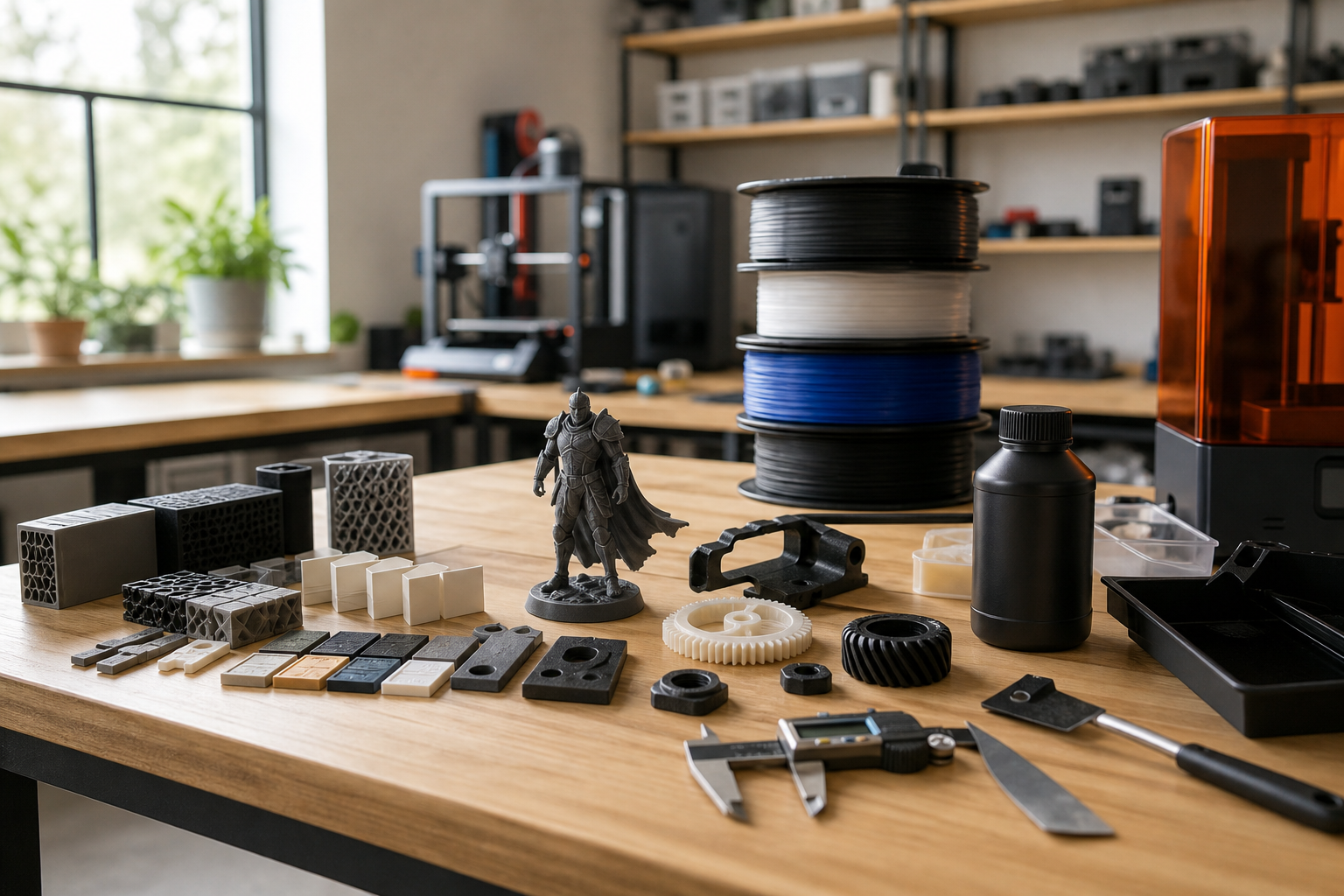
1. PLA is the safer starting point for many jobs
PLA is one of the most common 3D printing materials for a reason. It is easy to print, stable enough for many designs, and usually gives a predictable result without a lot of tuning. That makes it a good choice for display pieces, mock-ups, prototypes, and decorative objects. If the goal is to move from an idea to a physical part quickly, PLA often gives the cleanest path.
It also helps when a design is still being tested. A PLA prototype can show whether a shape reads well at the intended scale, whether the proportions feel right, and whether a part needs reinforcement before a more specialised material is used. Because it is straightforward, PLA removes some of the noise from the process.
2. Resin wins when detail is the main priority
Resin is usually the better choice when a piece needs crisp detail, a smoother surface, or sharp edges that would be harder to achieve with filament printing. It excels on smaller objects, miniature-style models, and parts where the finish is visible and important. If the object has fine textures, subtle geometry, or a more premium visual feel, resin can capture that very well.
The trade-off is that resin asks for more care. Printing is only one part of the job. Cleaning, post-curing, ventilation, and handling all matter more than they do with PLA. Resin can also be more brittle, so a part that looks strong may not actually behave like a tough functional component. That is why we use resin deliberately rather than by default.
3. Durability and handling are not the same thing as appearance
One of the easiest mistakes to make is choosing a material based only on how good it looks in a photo. A glossy resin part may look more refined than PLA, but if the item will be handled often, flexed, or packed for shipping, that appearance does not tell the whole story. PLA is often more forgiving for everyday use, especially on pieces that need a little resilience without becoming complicated.
For example, a desk ornament may be perfect in resin because the surface quality is the main value. A clip, holder, or custom casing may be better in PLA because the part needs to survive being used. The best material is the one that matches the real life job, not the one that simply photographs well.
4. Cost, time, and workflow affect the decision too
Material choice also changes production time and workshop effort. PLA is usually faster to work with and easier to repeat, which makes it efficient for small runs and iterations. Resin may take longer because of washing, curing, and more careful handling between stages. That extra work can be worthwhile, but it should be part of the decision from the beginning rather than discovered halfway through the project.
This is why a good workshop does not treat material as an upsell. A proper process weighs the visual result, the handling requirements, the post-processing burden, and the final use of the piece. A cheaper material is not automatically a compromise, and a more expensive one is not automatically better.
5. The right answer depends on the object’s purpose
If the object is a display piece, a quick concept print, or a prototype that needs to move fast through development, PLA is often the better option. If the object is small, detailed, and judged heavily on surface quality, resin usually makes more sense. If the brief includes durability, heat resistance, or regular handling, the decision may move beyond PLA and resin altogether into other materials such as PETG or flexible filament.
The main lesson is simple: the material should serve the design, not compete with it. At 4leafx, we want the final piece to feel intentional and well judged. That usually means picking the material that best supports the object’s real job, even if the answer is less glamorous than people expect.