
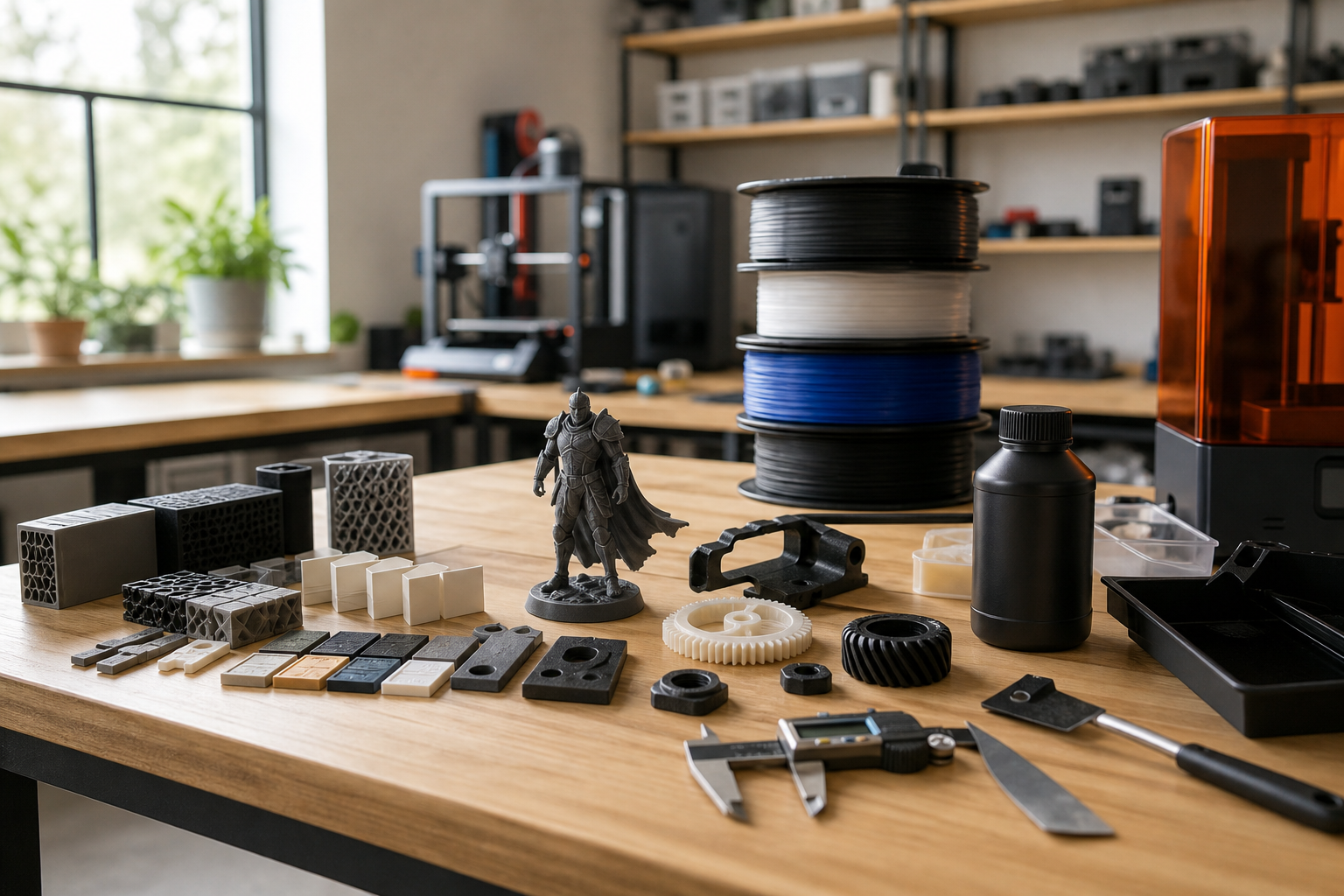
PLA is our default starting point
PLA is easy to print, stable, and widely available, which makes it a sensible default for a lot of workshop work. It is useful for display items, mockups, decorative pieces, and early prototypes. If the project needs a quick turnaround or a lower-risk test, PLA usually gives us the cleanest path. It also helps when we want to judge shape and proportion before committing to a more demanding material.
That said, PLA has limits. It can soften more easily in heat than tougher engineering plastics, and it is not the right answer for every functional part. If a piece will sit in direct sunlight, be handled roughly, or live in a hot environment, we think harder before using it. The material is useful precisely because it is predictable, but predictability is not the same thing as universal strength.
Resin is for fine detail and clean surfaces
Resin comes into play when the model needs crisp texture, sharp edges, or smooth surfaces that would be harder to achieve on an FDM printer. It is especially useful for smaller display pieces, miniature-style details, and components where surface quality matters more than toughness. Resin can capture subtle geometry very well, which makes it valuable for pieces that need visual precision.
The tradeoff is that resin asks for more care. It needs proper post-curing, cleaning, ventilation, and handling discipline. We also have to think about brittleness, because a resin print can look strong while still being more fragile than a comparable PLA or PETG part. That means we use resin deliberately, not automatically. When the final piece benefits from detail and finish, resin earns its place. When durability matters more, we do not force it.
PETG, TPU, and specialty needs
PETG is one of the materials we reach for when a part needs more toughness and better heat resistance than PLA can provide. It is useful for practical pieces, brackets, and parts that may be handled often. It can be a little more demanding to tune on the printer, but once the settings are right it offers a good balance of resilience and printability.
Flexible filament such as TPU is reserved for cases where bend and grip matter more than rigidity. It is not the right choice for decorative models, but it is useful for feet, bump protection, inserts, and other helper parts. We also keep an eye on specialty materials when a project needs a specific finish or a slightly different mechanical profile. Material choice is always a functional decision first and a visual decision second.
Supports, infill, and finish change the result
People often think the material alone determines the output. In practice, support placement, infill, layer height, and post-processing are just as important. A PLA print can look very refined with the right orientation and finishing, while a resin piece can still look rough if the cleanup is rushed. We treat the material as one part of a chain of decisions, not the only decision that matters.
That is why we keep notes on what worked. If a certain color or resin type behaves differently, we record it. If a post-processing method improves surface quality without weakening the part, we use it again. Over time this becomes a workshop library of practical knowledge rather than a vague preference list. The material page is less about naming plastics and more about explaining why a particular print should be made a certain way.
Choosing the right material is part of the service
For custom work, material guidance is part of the value. A client may ask for a finish that looks good on a screen, but the real requirement might be durability, low weight, or a safer result for shipping. We help narrow that down before production starts. That saves time, reduces risk, and keeps expectations realistic. If the brief calls for a collectible display object, we may steer toward PLA or resin. If it needs more physical resilience, PETG becomes more attractive.
The best outcome is when the material feels invisible because it is doing its job well. The print should feel intentional, not generic. Whether the object ends up as a desktop display, a prototype, or a custom commission, the material choice should support the story of the piece instead of distracting from it.