
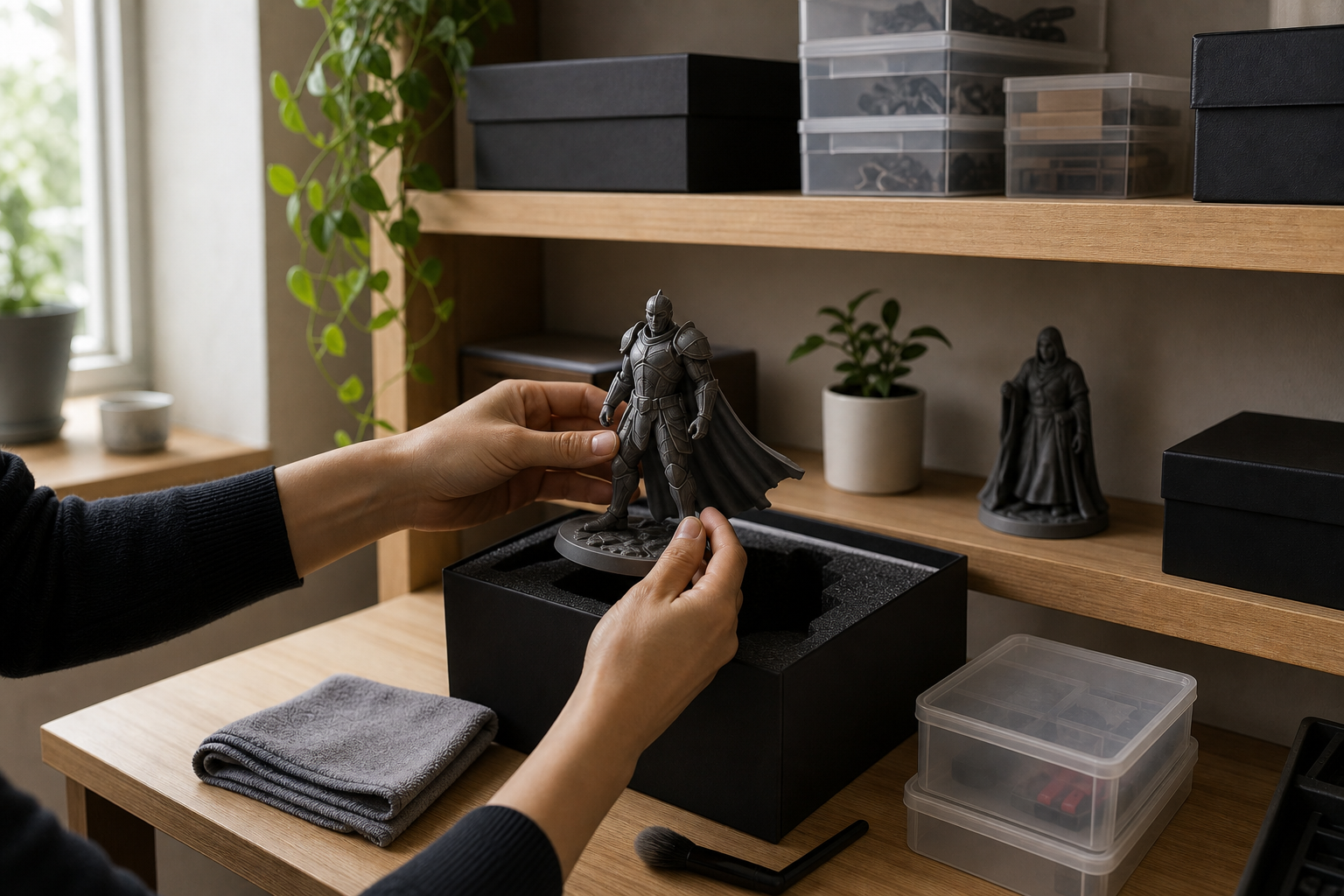
1. Unpack carefully and inspect once
When a print arrives, open the packaging slowly and avoid pulling foam, tape, or paper away too quickly. The safest first step is to check the outer condition of the package before touching the object itself. If there is any visible damage, take a quick photo so you have a record of the arrival condition. That is useful for both the buyer and the maker if something needs to be reviewed.
Once the print is out, look for support remnants, loose bits, or shipping dust. A soft brush or microfiber cloth is usually enough for a first clean on most display pieces. If the item is resin, handle it a bit more cautiously and make sure it has fully cured and cooled before putting stress on thin parts. The first inspection should be calm and simple, not a full maintenance routine.
2. Keep heat and direct sun in mind
Heat is one of the biggest enemies of 3D printed objects, especially PLA. A print that looks perfectly fine on a shelf can soften if it is left in a hot car, near a radiator, or in strong sunlight behind glass. Even if the item does not visibly deform right away, repeated heat exposure can slowly change its shape. For that reason, we recommend keeping printed pieces in a stable indoor environment whenever possible.
If the item is meant for a warmer environment, the material choice should already reflect that. Even then, it is worth avoiding unnecessary stress. A print is easiest to care for when it is given a predictable home. The more stable the environment, the less attention the piece needs later.
3. Cleaning should be gentle
For dust, a dry microfiber cloth is usually enough. For fingerprints or light grime, a slightly damp cloth can help, but harsh cleaners are not a good default. Strong solvents can mark the finish or weaken certain plastics. Resin especially should be treated with respect because the surface can scratch or dull more easily than people expect. If the print has painted areas or decals, test any cleaning method on a small, less visible section first.
The workshop approach is conservative because the safest cleaning method is usually the simplest one. The goal is to remove dust, not to refinish the object every time it gets touched. A light, regular clean keeps the piece presentable without introducing avoidable wear.
4. Display and storage need the same logic
The best display setup is one that supports the object rather than squeezing it. Use a flat shelf or stand where the print can rest evenly. Avoid cramped edges, unstable ledges, and places where the item could be knocked over easily. If the piece has delicate protrusions, keep it away from the main traffic path in the room. An attractive display is not much use if the object is constantly at risk.
For storage, keep the item wrapped or boxed in a way that prevents rubbing. Soft tissue, foam, or bubble wrap can help for transit storage, but make sure any material does not trap moisture. If the print includes small detached parts, store them together and label them clearly so reassembly is simple later. Good storage is quiet insurance for future use.
5. Minor repairs are normal
Small chips, scuffs, or glue repairs are not unusual over time, especially for prints that get handled often. If a support nub or seam is visible after shipping, it can often be cleaned with a careful trim or light sanding, but only when the owner is comfortable doing so. We prefer to tell people what is safe to try and where to stop. Overworking a surface usually creates more damage than the original flaw.
If a part actually breaks, the right repair depends on the material and the break itself. Some pieces can be re-glued. Others need replacement parts or a reprint. The important thing is to treat the piece as a craft object, not a disposable item. Good care extends the life of the object and respects the work that went into it.