1. The idea starts as a game object, not just a visual
When a game idea moves into physical form, the first question is what the object is for. Is it a prototype? A branded display piece? A collectible? A practical tool that supports play? That answer matters because it determines the shape, material, size, and finish. A token used in testing has very different requirements from a polished display stand or a gift tied to a game launch.
We think of the object as part of the game experience rather than a separate novelty. If it needs to help explain the game, it should be readable. If it needs to sit on a desk or shelf, it should look clean and intentional. If it is meant to be handled, it should be durable enough to survive normal use. The use case decides the design.
2. Digital game assets need physical translation
A digital asset can look great on a screen and still fail as a real object if it is not translated carefully. Thin lines may disappear, sharp details may not print cleanly, and shapes that feel balanced in a render may become awkward when they are standing on a table. Before we print, we review the asset as geometry, not just as artwork.
That often means simplifying some details and strengthening others. A logo edge may need to be thickened. A character silhouette may need a more stable base. A game icon may need spacing that allows it to read from a little further away. The goal is not to flatten the design. It is to preserve what matters while making it printable.
3. Prototypes help bridge the gap
Physical prototyping is one of the best ways to test whether a game idea works in the real world. A stand, token, or holder can reveal problems that are not obvious in a digital mock-up. Maybe the part is too light and tips over. Maybe the text is harder to read than expected. Maybe the proportions look good online but feel too bulky in the hand. A prototype answers those questions quickly.
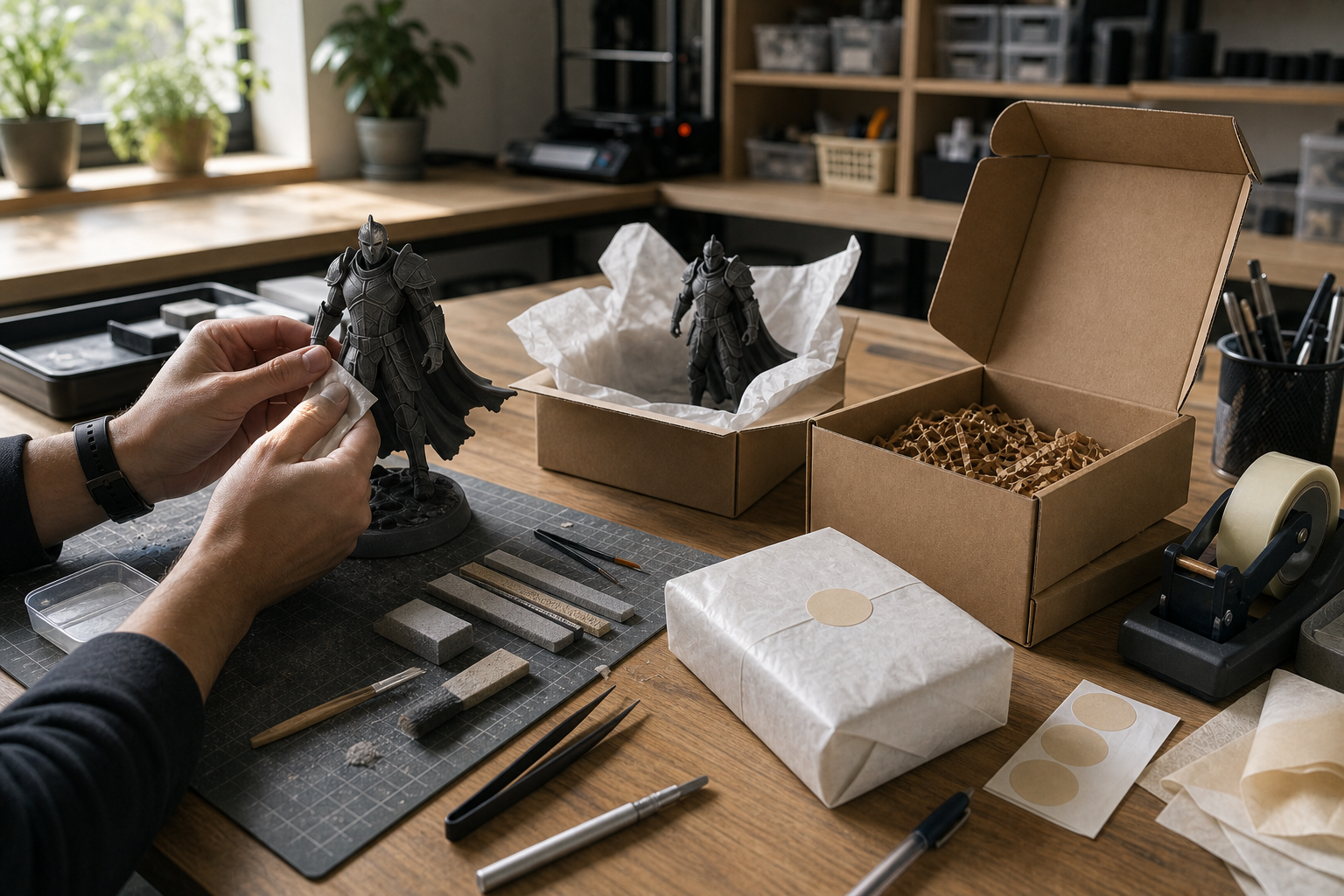
That is why we like to test early. A rough print is often more useful than a finished render because it tells us what the object is really doing. Once the base form works, we can refine the finish and presentation with more confidence. It is the same logic we use in game development: test the structure first, polish later.
4. Material choice shapes the final feel
The material matters just as much in hybrid projects as it does in straight 3D printing work. PLA is useful for quick prototypes, display items, and pieces that need a clean, reliable print. Resin is better when fine detail or a smoother surface is more important. PETG can be the better answer for items that need a little more durability or handling resistance.
For game-related objects, the right material depends on whether the piece is being viewed, touched, packed, shipped, or used repeatedly. A collectible made for display may justify a more refined surface. A practical game accessory may need toughness and ease of handling more than visual sharpness. The object should fit the role it plays in the game ecosystem.
5. Real-world examples make the process clearer
A few examples show how this works in practice. A custom card stand for a tabletop prototype needs to hold cards at the right angle without taking over the table. A token tray needs clear spacing so pieces are easy to remove and return. A branded display piece for a launch event needs a stronger base and a cleaner surface finish because it will be seen from multiple angles.
Another example is a game-themed gift. If it is tied to a player, team, or project, the object should carry the same identity without becoming cluttered. A name, symbol, date, or compact logo may be enough. The more focused the design, the more likely it is to feel premium instead of overloaded.
6. Common mistakes to avoid
The biggest mistake is making the object too literal. A digital concept does not need every visual detail translated exactly into plastic. Some things work on screen because the screen can do the work for you. In physical form, the object has to stand on its own. That usually means simplifying the design so the important parts stay visible.
Another mistake is ignoring scale. A small object that looks nice on a monitor may be too fragile in real life. A large object can become unwieldy if it is not broken up logically. A third mistake is using the wrong finish level for the use case. A prototype does not need the same treatment as a final collectible, but both still need to be handled with care.
7. Why this kind of work fits 4leafx
This hybrid process fits 4leafx because the brand already sits between digital and physical thinking. Games give us systems, timing, and interaction. 3D printing gives us material, form, and presence. When those two sides meet, the result can be more useful and more memorable than either side alone.
The point is not to turn every idea into merchandise. The point is to make objects that extend the meaning of a game or support the way people use it. That might be a prototype, a display item, a launch piece, or a custom object that makes the project feel complete. If the idea is worth building digitally, there is often a physical form worth exploring too.
Conclusion
Turning game ideas into 3D printed objects works because both sides are really about making ideas tangible. A digital system becomes clearer when it has a physical point of reference. A physical object becomes more meaningful when it carries the logic of the game behind it. That combination is where the strongest work tends to happen.
At 4leafx, we like that kind of crossover. It keeps the studio practical, creative, and focused on making things that feel rare enough to keep.