1. Where ideas start
Most projects begin in a very ordinary way. A note, a sketch, a rough thought, or a problem that needs solving. Sometimes the starting point is creative, like a game concept with a strong theme or a collectible object we want to make real. Sometimes it is practical, like a sign, a display piece, or a prototype that needs to do a job properly.
The first step is never to make it bigger. It is to make it clearer. We ask basic questions early: what is this for, who is it for, what does success look like, and what is the simplest version that still works? Those questions sound simple, but they save a lot of time later.
2. From concept to first draft
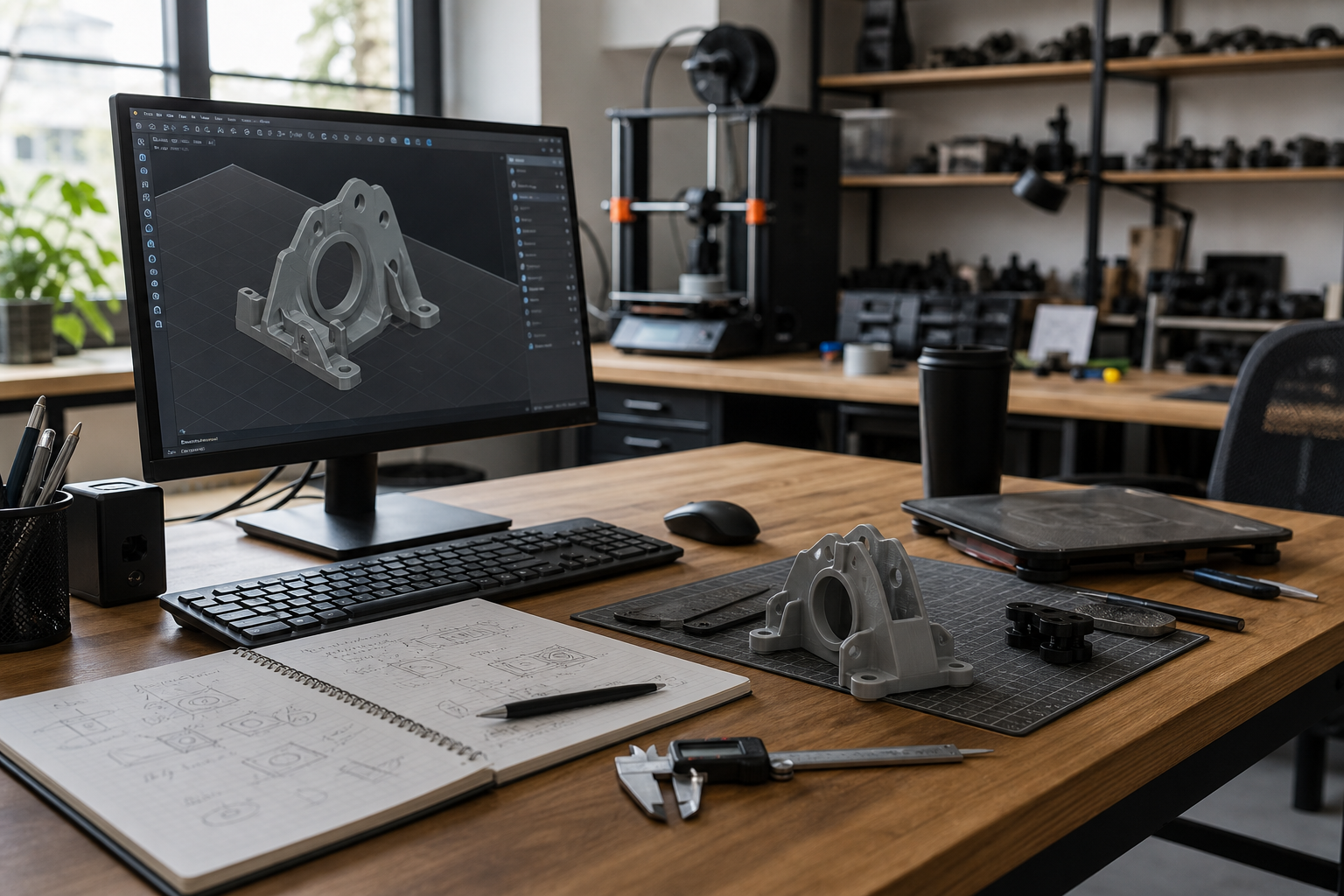
Once the idea is clear, we move into a rough first draft. This stage is different depending on the project, but the logic is the same. We want something tangible enough to review. For 3D printing, that may mean a blockout model, a rough shape, or a digital draft that checks scale and proportion before any fine detail is added.
For game development, the first draft is usually a playable skeleton. We are not trying to make the game pretty at this stage. We are trying to make it behave. That means basic rules, simple flow, and enough structure to see whether the game is actually fun or whether it only sounds fun on paper. A rough version can reveal more truth than a polished mock-up.
3. Building the real thing
Once the draft has proved itself, we begin the proper build. In 3D printing, that often means cleaning up the model, adjusting for printability, selecting materials, and deciding how the object should be oriented. These choices affect everything from appearance to strength. A model that looks good on screen can still be awkward in the hand, too fragile to print well, or difficult to finish cleanly.
In game development, the build stage means turning the prototype into a proper system. Rules need to be stable. UI needs to be readable. Feedback needs to be clear. The best game systems are not the loudest ones. They are the ones that quietly do the right thing every time. If the structure is not stable, the polish does not matter yet.
4. Refinement is where quality appears
A lot of people think quality comes from the initial idea. In reality, quality usually appears during refinement. This is the stage where we spend time on the things that are easy to overlook: is the object balanced properly, does the surface feel finished, is the text readable at the right distance, does the game explain itself without too much friction, and does the design still feel good after a few rounds of review?
For 3D prints, refinement can mean adjusting edges, improving fit, cleaning up support marks, or changing the finish so the piece feels more deliberate. A print can be technically complete and still feel unfinished if those details are ignored. For games, refinement means balancing flow, tightening rules, and making sure the player never has to fight the interface. That is exactly why we keep revisiting our guides like [How our 3D printing process works](/guides/how-our-3d-printing-process-works/) and [From idea to playable game: our development process](/guides/from-idea-to-playable-game-our-development-process/).
5. Common challenges we deal with
No project is smooth all the way through. With 3D printing, some common issues are warping, fragile areas, poor orientation, support scars, and material mismatch. These are not random problems. They usually come from decisions made earlier in the process. The fix is often to go back a step and improve the design rather than trying to force the print to behave.
With game development, the common problems are different but just as familiar. Over-scoping is a big one. So is spending too long on visuals before the mechanics are proven. Another common issue is building something that makes sense to the creator but not to a new player. That is why testing matters so much. It exposes what the team has become blind to.
6. Why we share the process
We think process matters because it is a sign that the work is being taken seriously. Anyone can show a finished object or a final game screen. What matters is how the result was made, how the team responded to problems, and whether the final piece was built with care. That is especially important for a site like 4leafx, where we want the brand to feel real rather than inflated.
A real studio should not feel like a black box. People should be able to understand how the work is made, what standards are used, and why certain decisions were chosen. Transparency builds trust, and trust matters when you are asking people to care about your work. It is also why the homepage now has a proper [Guides & Insights](/guides/) section.
Conclusion
Behind the scenes, our projects are built the same way every time: idea, draft, build, refine. The details change depending on whether the work is physical or digital, but the mindset does not. We want the result to be clear, useful, and worth keeping.
That approach is slower than chasing quick output, but it produces better work. It also gives each project a stronger identity, because the final result reflects a real process rather than a rushed one. At 4leafx, that is the point.